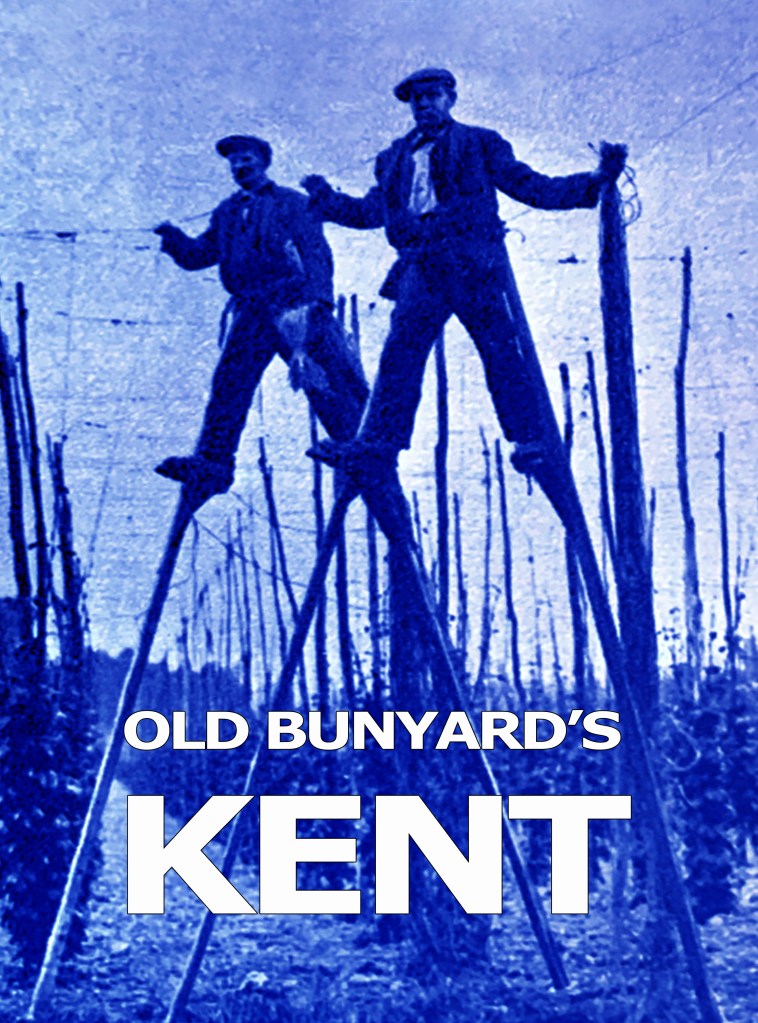
The People & Places,
Past Times & Pastimes
of the Garden of England
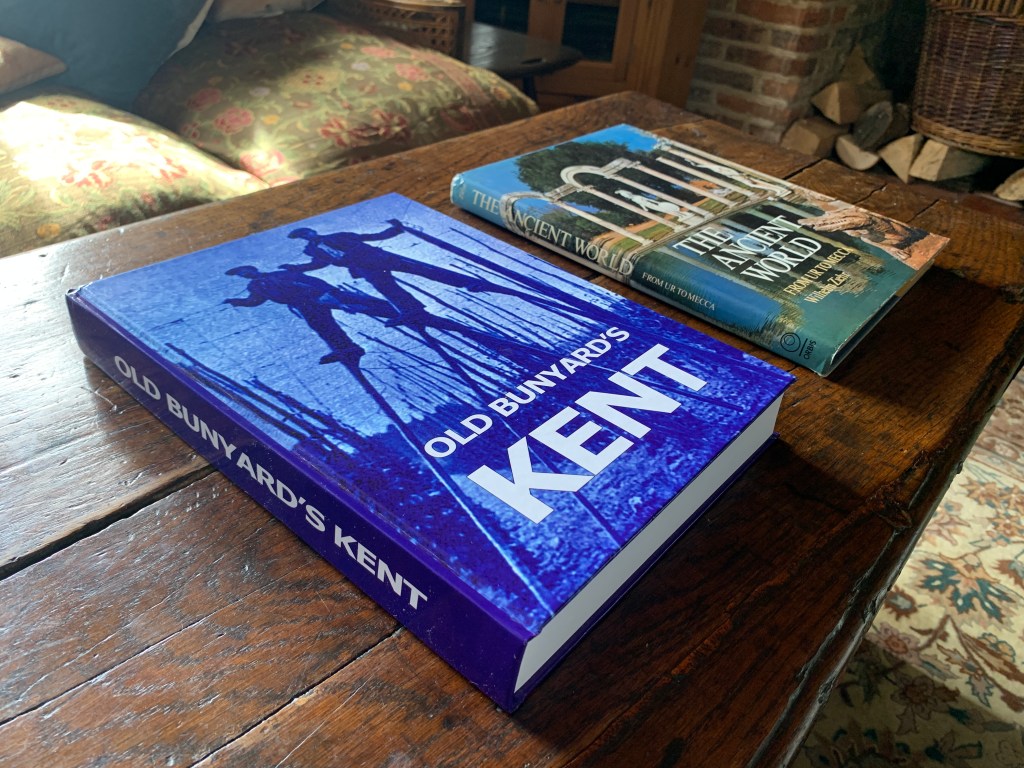
Old Bunyard’s Kent is a remarkable new book that represents something of a historical landmark. A highly readable and witty encyclopaedia of England’s first and once foremost county, it embodies the first comprehensive account of Kent’s past and present attainments in centuries. By virtue of its sheer scale, scope, and quality, it is a genuine magnum opus.
Old Bunyard’s Kent evolved from the website ‘Old Bunyard’s Kent Pride’ (OBKP), created in 2020 to provide morale-boosting diversion during lockdown. It is essentially a Kentish compendium, recording the county’s remarkable natural, historical, political, social, cultural, and sporting peculiarities from time immemorial to the present day. Importantly, it covers the whole geographical extent of historical Kent, up to and including Deptford, which embraces areas currently administered by London.
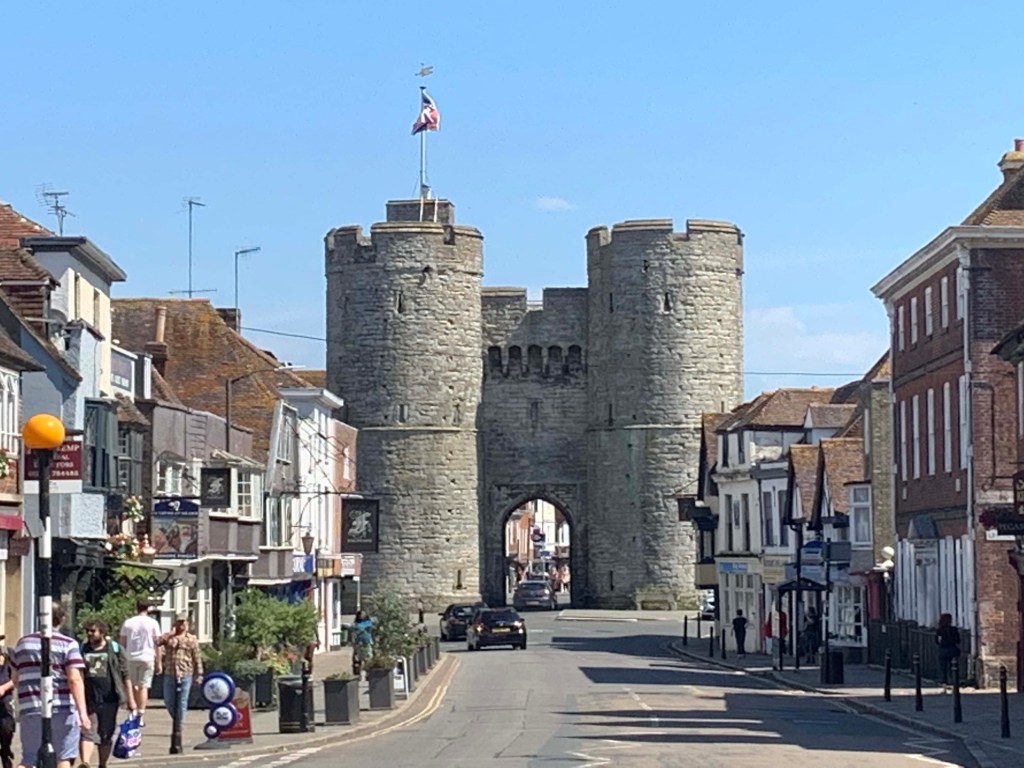
A monumental work
Old Bunyard’s Kent is a once-in-a lifetime celebration of Kent:
– 504 large pages
– Over 435,000 words
– Nearly 4,000 entries
– A 19-page index
– 44 original photographs
– High-quality paper and print
– A genuine ‘weighty tome’
– Designed to be treasured
There has been a handful of general surveys of Kent since the 16th century, generally travelogues or gazetteers. Old Bunyard’s Kent differs in a number of ways:
- The content is arranged by topic, mostly chronologically;
- Entries are limited to about 120 words for moreishness;
- The tone is scholarly but infused with wit and humour;
- The subject matter is up to date as of mid-2026;
- It provides a rich record at a time of unprecedented change.
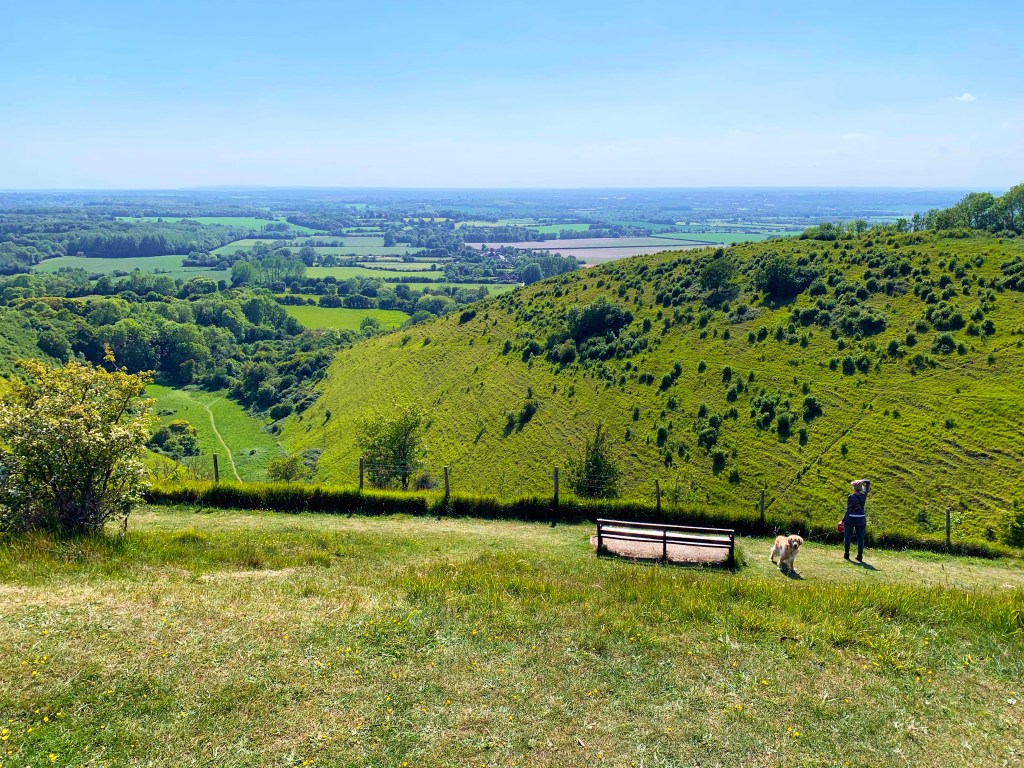
What’s so special about Kent?
Nearly half a million years ago, the north European landmass witnessed a catastrophic geological event: the opening of the channel that split Britain from mainland Europe and turned Kent into a borderland. Being closest to the continent, and standing guard over the narrow strip of water that formed Britain’s defensive moat, Kent became a conduit for trade and cultural exchange in peacetime and a frontier in war.
Since ancient times, its abundant natural resources had made it an industrial powerhouse, long before the North; and its variety of soils supported large-scale production of livestock, notably of Romney sheep, and the agricultural productivity that gave rise to its nickname, the Garden of England.
Kent’s critical military importance made it for centuries the hub of England’s and then Britain’s defences, and the presence of so many young men in the Victorian era spawned extraordinary ingenuity in the creation of world sports. Its proximity to London likewise became a huge stimulus to activity as Kent became not only a favoured spot for national figures to make their home, but also an extraordinarily fashionable resort for holidaymakers.
Naturally the county witnessed a superabundance of historical events of national and international importance. The presence of vital east-facing ports made Kent the portal of numerous world famous figures, and the fact that St Augustine chose Kent for the reintroduction of Christianity to Britain gifted the county not only two cathedrals but the home of the worldwide Anglican community.
So much having gone on in Kent for so long has yielded in OBK a rich body of material supporting the thesis that Kent’s unique geographical location shaped a culture more fruitful than anywhere but a handful of the world’s greatest cities. Old Bunyard’s list of Kent superlatives, running to ten full pages, constitutes a contribution to world culture that puts the majority of the world’s nations in the shade.
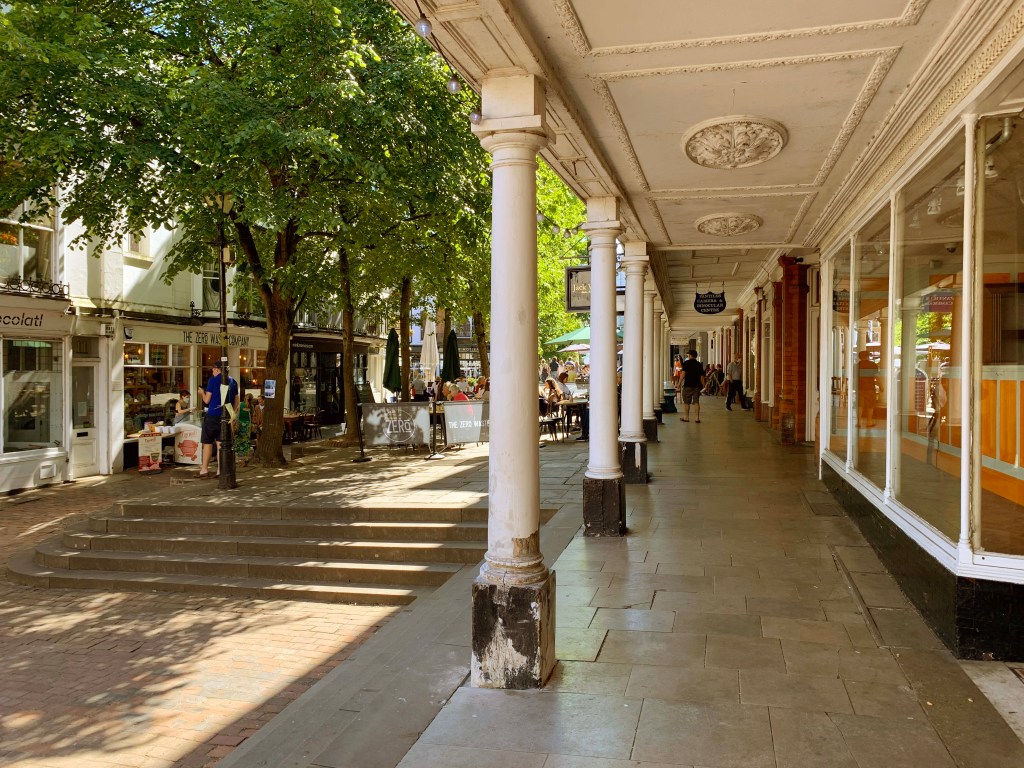
Table of Contents
PART ONE:
FACT
The Natural Order
Getting Around
The Wealth of Knowledge
Preserving the Past
Movers and Shakers
Fight the Good Fight
Living Kent
GALLERY
44 original photographs
by the author
PART TWO:
FANCY
That’s Entertainment
The Mighty Pen
The Sound of Music
Creative Designs
Keeping the Faith
Fresh Thinking
A Cradle of Sport
EXTRAS
Some Kent distinctions
Further reading
Index
Greenwood’s 1839 map
The Perfect Gift
Old Bunyard’s Kent serves numerous useful purposes:
– Local studies
– Light reading
– Fact checking
– Tourism guide
– Family history
– Quiz questions
– Home education
– Teaching resource
– Newcomer’s primer
– Ideas for private studies
– A perfect coffee-table addition
– A lasting asset to any book collection
Example entries
Cassius Dio provided the first historical record of a battle on British soil. When Aulus Plautius invaded in AD 43, the Brythons under Caratacus and Togodumnus retreated from an opening encounter in eastern Kent to the Medway between Aylesford and Rochester, where the pursuing Romans found them massed on the western bank. Auxiliary troops swam across to attack the British chariot horses, while the main army crossed the river in the confusion. The next day, Hosidius Geta’s legion mounted a surprise attack and won him a triumph, despite the Brythons’ three-to-one numerical superiority. Around 5,000 Britons were killed, and 850 Romans. The Celts retreated to the Thames, but were only delaying the inevitable.
Greenwich’s Placentia Palace was built as Bella Court in 1443 by Humphrey, Duke of Gloucester, who was removed within four years at Queen Margaret’s behest. This was after all the ultimate des. res., in a fantastic location next to a huge deer park and near the road to Canterbury, and with easy river access to London Town and Westminster. She changed its name to ‘Placentia’, meaning ‘Pleasure’, which was often replaced with the friendlier ‘Pleasaunce’. Substantially rebuilt by Henry VII, it was the birthplace of HENRY VIII, MARY I, and ELIZABETH I, and home to other famous royals. Charles II rashly demolished it in 1660 for something new that was never constructed. Instead, the site accommodated the Greenwich Hospital three decades later.
Although STEPHEN GRAY from Canterbury started as an apprentice in his father’s dyeing business, he assisted the great astronomer John Flamsteed with observations – an association that hobbled his scientific career by incurring the enmity of Isaac Newton, Flamsteed’s domineering rival. Sick and poor, Gray ended up in 1720 teaching at Charterhouse, where he made an epoch-making discovery: that a static charge could be conducted along a wire. At Reverend Granville Wheler’s home Otterden Place, he performed experiments inside and outside, finally achieving electrical conduction across 800 feet and establishing the principle of insulation. Gray’s celebrated ‘Flying Boy’ experiment would also demonstrate electrical induction. Benjamin Franklin later tried stealing the credit, but it was Gray who won the Royal Society’s first two Copley Medals
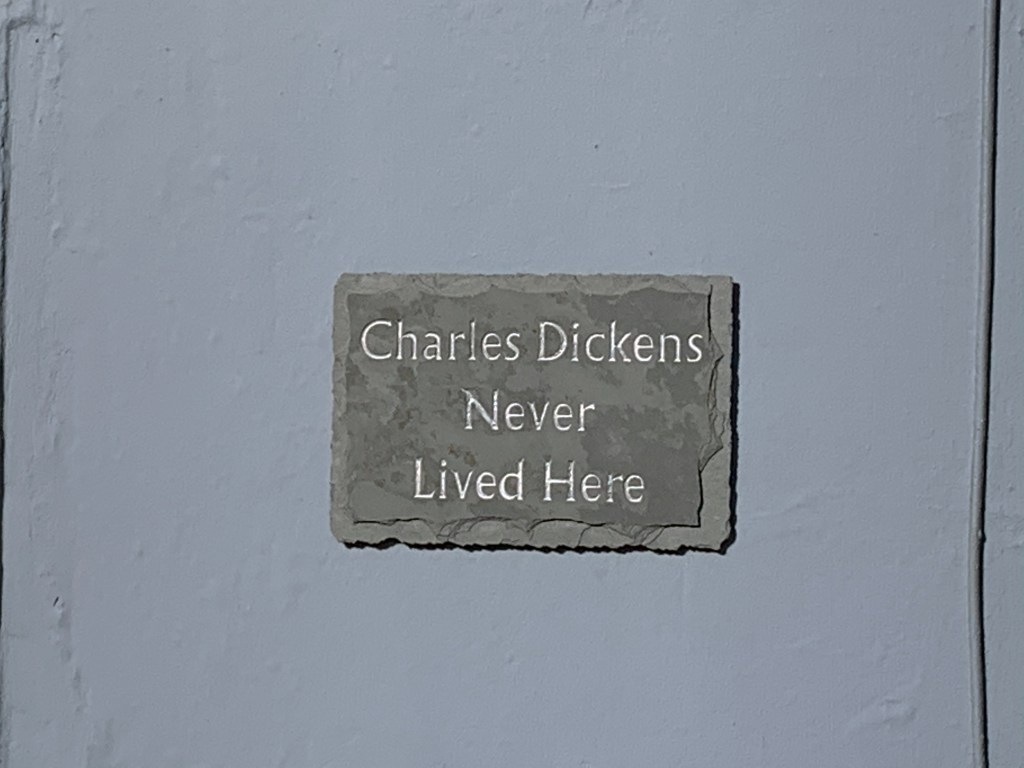
In 1842, on a trip to America, Charles Dickens befriended Edgar Allan Poe, who two years earlier had reviewed ‘Barnaby Rudge’ unflatteringly despite enjoying Rudge’s pet raven Grip. Poe was delighted to learn that ‘Grip’ was based on Dickens’ characterful pet of that name, who had died of lead poisoning a year before, been stuffed, and was kept at Gads Hill. Three years later, she would inspire Poe’s greatest poetic creation, ‘The Raven’. Now restored, this “Most Famous Bird in the World” is displayed at the Free Library of Philadelphia, and will see Kent nevermore.
Kent was central to the story of the Ashes. England captain IVO BLIGH, lord of the manor of Cobham, went down in cricketing history for his part in the 1882-3 test series in Australia. It started when the ‘Sporting Times’ spoof obituary of English cricket after the previous series prompted him to announce his aim of regaining England’s “ashes”. After the series was won 2-1, some Australian women gave him an urn with the ashes of a local bail that bore a ditty naming “Ivo”. He married one of them, who thereby became the Countess of Darnley. After his death, she generously gifted the urn to the MCC.
While filming in Kent, Kim Novak attended surely the most historic Hollywood gathering outside California. With the legendary Judy Garland in England to make a special performance at the London Palladium, Oscar-winning great George Sanders and his wife Benita Hume, Ronald Colman’s widow, invited her to young Juliet Colman’s Hallowe’en party at their home, Weeks Farm in Egerton. Incredibly, the 130 guests, who stayed till 5.30am, also included Vivian Leigh and Garland’s 18-year-old daughter, Liza Minnelli. Consequently, Shere Khan, Dorothy Gale, Scarlett O’Hara, and Sally Bowles all met in one Kent farmhouse. Within eight years, Sanders, Garland, and Leigh were all dead; but Minnelli would outdo her mother by winning an Oscar for ‘Cabaret’ (1972).
After attending Le Cordon Bleu cookery school in Paris, ROSEMARY HUME from Sevenoaks co-founded the Petit Cordon Bleu cookery school in Sloane Street. When the flower-arranger Constance Spry offered to write a book showcasing her best dishes, Hume agreed, having no literary skills. The ‘Constance Spry Cookery Book’, credited to Constance Spry & Rosemary Hume, became a familiar feature on the kitchen bookshelf. In 1953, possibly suggested by the Jubilee Chicken created for George V in 1935, Hume designed a dish specially for Queen Elizabeth‘s coronation that she initially called Poulet Reine Elizabeth. Unusually for the period, it was made with curry powder. It caught on under its now traditional name, Coronation Chicken.

About the author
Old Bunyard’s paternal ancestry in his hometown Maidstone goes back at least 14 generations, while his maternal line were farmers from Hildenborough, East Farleigh, and finally Coxheath. He went to primary school in Shepway with interludes in Kingsgate and Tunstall before attending Maidstone Grammar School and then Oxford; his four-year degree course included one at Frankfurt University. He spent 15 years living and working in marcomms in London before moving to Egerton, where he has lived ever since. His wife is an internationally respected yoga tutor, while his children both attended The King’s School, Canterbury before studying Archaeology.
A two-part magazine feature on Anglo-Saxon Kent he wrote in 2003 sparked a passion for local history and culture that he has indulged actively ever since. A Maidstone United fan since 1962, in 2019-20 he curated the ‘Maidstone: United in Football’ exhibition at Maidstone Museum that attracted >20,000 visitors, followed by a legacy exhibition in the town centre. Musical projects spawned by his professional interest in neuroscience include a movie used as an educational resource in local schools, and an album that formed the basis of workplace mental-health initiatives. As well as playing bridge weekly at Lenham and Little Chart, Old Bunyard has taken part in literally hundreds of pub quizzes around Kent.
What they said about OBKP
“A fascinating review of Kent history, its people, its places, its activities created by a knowledgeable local historian” – Bromley Borough Local History Society
“This is a terrific encyclopaedia of Kent… truly a great achievement” – Sandra Howard, Baroness Howard of Lympne
“Truly a labour of love, really wonderfully comprehensive and impressive” – Rory Sutherland, adman, journalist, and author
“It is truly a massive piece of work. A great effort” – Jonathan Rice, author and Chairman, Kent Cricket Heritage Trust
“Amazing! Covers fascinating ground pretty comprehensively” – Richard Stileman, Chairman, Kent Gardens Trust
“Old Bunyard gives us much to be proud of” – Remony Millwater, former High Sheriff of Kent
Get your copies
Old Bunyard’s Kent is now in production, and will be launched in late-October 2026.
The r.r.p. is £50. Price of additional p&p available by request (UK only).
To register your interest, inquire after special offers, or place an order, please contact:
info@oldbunyardskent.uk
© Old Bunyard 2026.
Unauthorised reproduction prohibited.
